
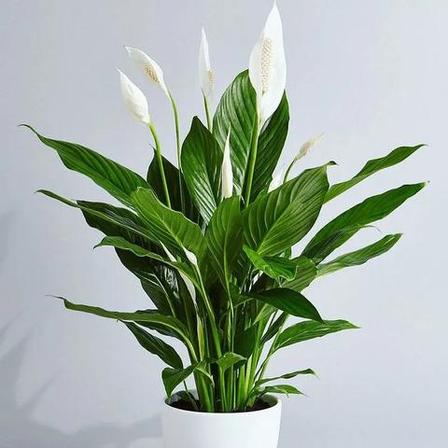
Peace Lily (Spathiphyllum wallisii)
Peace lilies are beautiful and low-maintenance houseplants. Here is a comprehensive guide to caring for them:
Light
- Ideal Condition: They thrive in bright, indirect light. North, northeast, or northwest-facing windows are perfect spots. You can also place them a few feet away from south or west-facing windows, or use sheer curtains to filter strong sunlight.
- Low Light Tolerance: They can survive in low-light environments, but this may result in fewer or no flowers and slower growth.
- Avoid: Direct sunlight, which can scorch the leaves, causing brown spots or edges.
Watering
- Rule of Thumb: Water when the top 1-2 inches of soil feel dry to the touch. This usually means watering once a week in spring and summer, and every 10-14 days in fall and winter.
- Water Quality: Use room-temperature water. If possible, use filtered, distilled, or rainwater, as tap water may contain chemicals like chlorine and fluoride that can cause brown leaf tips.
- Drainage: Ensure the pot has drainage holes to prevent water from accumulating at the bottom, which can lead to root rot. After watering, let the excess water drain away completely.
- Signs of Issues:
- Drooping leaves usually indicate underwatering, and the plant will perk up quickly after being watered.
- Yellow leaves may be a sign of overwatering or poor drainage.
Humidity
- Ideal Level: Peace lilies prefer high humidity, ideally between 40-60%.
- How to Increase Humidity:
- Place the pot on a tray filled with pebbles and water, making sure the bottom of the pot is above the water level. As the water evaporates, it will increase the humidity around the plant.
- Mist the leaves regularly with water, especially in dry environments or during winter when heating systems are in use.
- Group your peace lily with other plants, as they release moisture through transpiration, creating a more humid microclimate.
- Use a humidifier near the plant.
Temperature
- Ideal Range: They grow best in temperatures between 18-27°C.
- Avoid: Temperatures below 15°C, as this can damage the leaves and slow down growth. Also, keep them away from cold drafts, such as those from open doors, windows, air conditioners, and heating vents.
Soil
- Type: Use a well-draining, slightly acidic potting mix. A good option is Focus House Plant Compost
- Repotting: Repot your peace lily every 1-2 years in spring, or when you notice the roots growing out of the drainage holes or the plant becoming root-bound. Choose a pot that is one size larger than the current one, and make sure it has drainage holes.
Fertilizing
- Schedule: Feed your peace lily once a month during the growing season (spring and summer) with a balanced, water-soluble fertilizer, such as a 20-20-20 formula. Dilute the fertilizer to half the recommended strength to avoid over-fertilization, which can burn the roots.
- Stop Fertilizing: Reduce or stop fertilizing in fall and winter, as the plant's growth slows down during this time.
Pruning and Cleaning
- Pruning: Remove any dead, yellow, or brown leaves and flowers regularly to keep the plant looking neat and healthy. Use clean, sharp scissors or pruning shears, and cut the stems close to the base of the plant.
- Cleaning: Wipe the leaves with a damp cloth or sponge from time to time to remove dust. This will help the plant absorb more light and improve its overall appearance.
Common Problems and Solutions
- Brown Leaf Tips: This is usually caused by low humidity, underwatering, or the use of tap water. Increase humidity, water more regularly, or switch to filtered water.
- Yellow Leaves: This can be a sign of overwatering, underwatering, or too much direct sunlight. Check the soil moisture and adjust your watering schedule, and move the plant to a more suitable location.
- No Flowers: This is often due to insufficient light or lack of nutrients. Move the plant to a brighter spot and fertilize it regularly during the growing season.
- Pests: Peace lilies are relatively pest-resistant, but they can occasionally be affected by mealybugs, spider mites, or scale insects. Treat any infestations promptly, ask a member of staff for any treatments ar advice